Gymnastics · 1972 · Munich, West Germany
The Munich Sweetheart
A 17-year-old Soviet gymnast's public collapse, tearful recovery and a release move nobody had tried before turn Olympic gymnastics into a television phenomenon.
3 (beam, floor, team)
Gold medals, 1972
1 (uneven bars)
Silver medals, 1972
17
Age
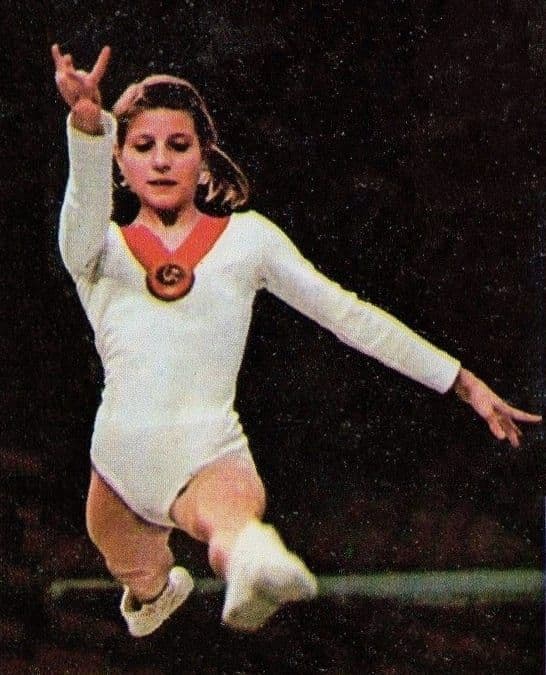
Olga Korbut went to Munich as a reserve on the Soviet team, not one of the names anyone had come to see. In the team competition she missed her mount on the uneven bars three times in front of a packed arena, a visible, public collapse that appeared to end any hope of an individual medal.
Days later, in the individual event finals, she came back to win gold on the balance beam and the floor exercise, and broke down in tears on the podium in a way television audiences had never seen from a Soviet athlete. On the uneven bars she stood up on the high bar and threw a backward somersault release off it, a move no woman had attempted in competition and one audacious enough that it was later restricted on safety grounds. It is still called the 'Korbut flip'.
Three golds and a silver undersells what happened at Munich 1972. Gymnastics went from a niche, ballet-adjacent sport to one of the most popular events at the Olympics, and Korbut, tiny and visibly emotional in front of the cameras, was the first global star it produced.
Watch the Moment